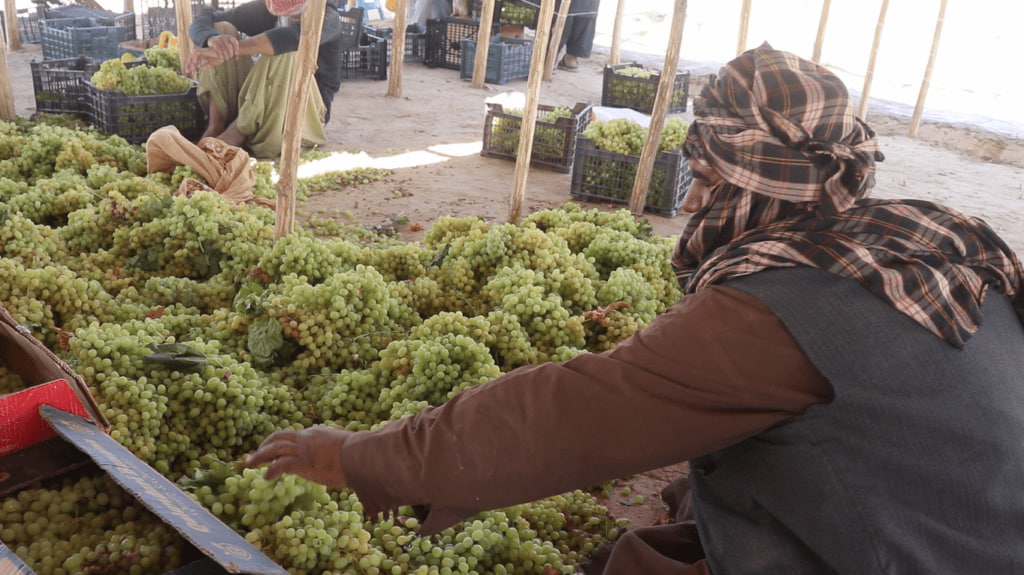
Growers say rain, plant diseases and natural disasters damaged their harvests in previous years, but these problems were less severe this year due to favourable weather, resulting in a good grape harvest.
Haji Enayat, a grower from Gilan district of the province, said he harvested around 10.5 tonnes of grapes from about 1,000 vines last year, but this year’s harvest had nearly tripled.
“Last year, I harvested 10.5 tonnes of grapes from 1,000 vines, but this year the harvest has almost tripled and I may collect between 28 and 31.5 tonnes,” he told Pajhwok.
Enayat said he had spent heavily on establishing and maintaining his vineyards but was concerned that weak market conditions would prevent him from recovering his costs.
He said traders bought grapes for around 170 afghanis per seven kilograms last year, but this year even high-quality grapes were difficult to sell for 70 afghanis per seven kilograms.
Another grower from the area, Mohammad Anwar, described this year’s grape harvest as “extraordinary” but said the lack of suitable markets had made him concerned.
He said there were raisin houses in the area, but most were not standardised and lacked adequate facilities to preserve the produce.
Another grower, Nasibullah, said many traders used to visit the area during the harvest season in previous years and take vineyards on contract, but so far this year, no significant number of traders had arrived.
“I am worried that my grapes will spoil, so I have already hired workers and made arrangements to dry the grapes in the open,” he said.
He called on the government and traders to find domestic and foreign markets for Ghazni grapes, facilitate exports and build standard cold-storage facilities to preserve the produce.
The growers also consider continued trade with Pakistan and keeping the country’s borders open important. They said Pakistan was one of the major markets for Afghanistan’s fresh and dried fruits and that border closures affected the prices and sale of produce.
According to information from the Ghazni Agriculture Department, this year’s grape harvest in the province is estimated at around 500,000 metric tonnes, an increase of 10 percent compared with last year.
Qari Zakaria Hotak, spokesman for the Agriculture Department, told Pajhwok that last year’s grape harvest in Ghazni was estimated at around 454,000 metric tonnes. He said production had increased by 10 percent so far this year and could rise further.
Hotak said that although trade sometimes faced difficulties at the country’s borders, the department was working to find markets for Ghazni grapes and other agricultural products and facilitate the construction of cold-storage facilities to preserve produce.
Economic expert Mohammad Farooq Boya said the government should build standard cold-storage facilities in the country and find new markets for Afghanistan’s agricultural products in the region, Asia and Europe.
He said diversifying export markets would protect Afghanistan’s agricultural products from dependence on a single country and trade route and reduce reliance on Pakistani markets.
Ghazni is one of Afghanistan’s provinces with extensive grape vineyards and produces large quantities of fresh grapes and raisins every year.