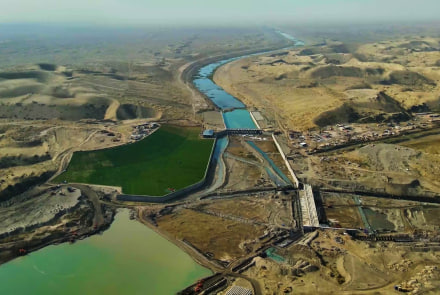
The Qosh Tepa Canal is nearing operational readiness, with water from the Amu Darya expected to flow into the canal in the near future.
The project is one of Afghanistan’s largest water infrastructure projects, designed to divert water from the Amu Darya and irrigate hundreds of thousands of hectares of agricultural land in northern Afghanistan.
The National Development Corporation (NDC) said that excavation work on the second phase of the Qosh Tepa Canal is 99% complete, while construction of 47 bridges and water management infrastructure is ongoing.
Nabiullah Arghandiwal, spokesperson for the corporation, said: “We can say that construction of the canal is in its final stages, and the National Development Corporation is working to release water from the Amu Darya into the headworks and main Qosh Tepa Canal in the near future.”
He added that construction of the canal’s headworks is ongoing and assured that the corporation is closely monitoring the implementation of the project.
Completion of the project could help expand cultivated land, increase agricultural production, create employment opportunities, and reduce Afghanistan’s dependence on imports of certain food products.
Mir Shakeeb Mir, an economic analyst, said: “The important point is that Afghanistan must introduce the necessary improvements to the canal’s irrigation system to ensure efficient use of its water and facilitate the growth and development of the agricultural sector.”
Preliminary estimates indicate that the Qosh Tepa Canal has the capacity to carry nearly 650 cubic meters of water per second and is expected to irrigate between 2.5 million and 3 million jeribs (500,000 to 600,000 hectares) of agricultural land once operational.
Wasim Safi, CEO of the Chamber of Agriculture and Livestock, said: “The Qosh Tepa Canal is one of Afghanistan’s largest agricultural irrigation projects and can facilitate the development of the agricultural sector. With the completion of this canal, lands that have been deprived of irrigation due to drought and water shortages can once again be irrigated and regain their fertility.”
Alongside the project’s importance for Afghanistan’s agricultural development, the use of water from the Amu Darya and its potential impact on downstream countries have also drawn attention.
Uzbekistan’s minister of water resources previously said that Afghanistan has the right to use water from the Amu Darya, but the amount of water withdrawn should be determined through dialogue and agreement between the two countries.