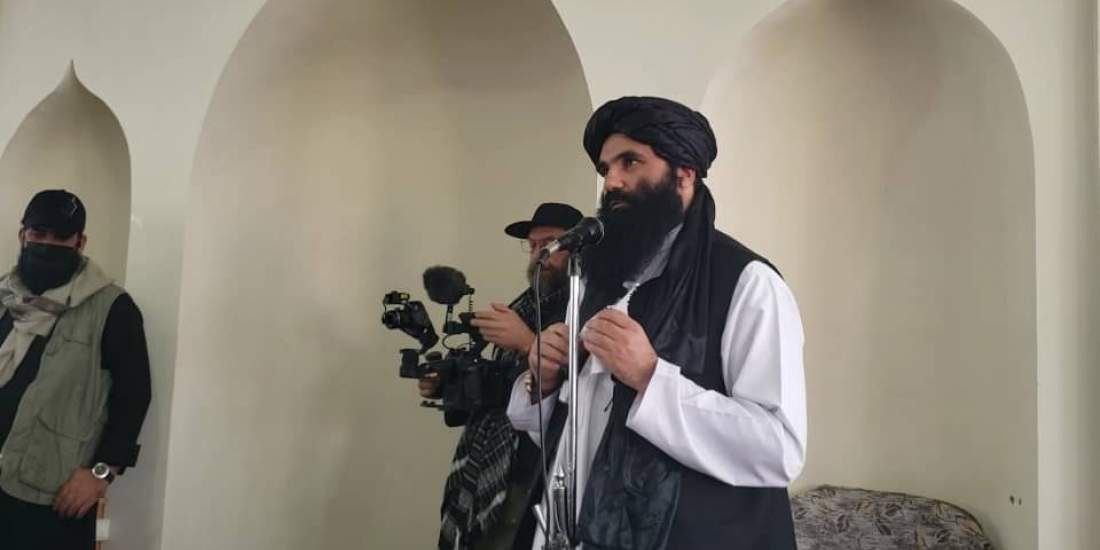
Haqqani said at the meeting that Afghanistan is the “common home of everyone” and called on political leaders and opponents of the Taliban to return to the country. He stressed that anyone who does not act against the “national interests and the Taliban government” can live freely in Afghanistan.
The Taliban Interior Minister said that the group is not opposed to the “dignity of anyone” and claimed that ethnic, religious, and linguistic divisions in Afghanistan are the result of malicious foreign efforts. He also described the current security and stability as “Afghanistan’s greatest asset.”
During the meeting, Haqqani also called on political figures such as Mohammad Karim Khalili and Mohammad Mohaqeq to return to Afghanistan.
However, Haqqani’s remarks about inclusivity and unity come at a time when critics of the Taliban have expressed concern over increasing pressure on the Shiite community and restrictions imposed on Shiite religious and educational institutions. They say that during the Taliban’s rule, a number of institutions associated with the Shiite community, including some educational centers and media outlets, have faced restrictions or confiscation, while the presence of Shiites at senior levels of government remains very limited.
At the same meeting, Sharifi Balkhabi, who is close to Sirajuddin Haqqani, raised the problems faced by the people of Bamiyan and said that the province is suffering from a severe lack of basic infrastructure, including roads, irrigation water, and electricity.
Balkhabi also spoke about the situation of Bamiyan’s mines, saying that the province’s mineral resources are being sold, but the revenues are not being used for the development of Bamiyan. He added that even workers for mining projects are mostly recruited from outside the province.
He warned that residents of areas surrounding the mines have faced health problems as a result of mining activities, including respiratory diseases, asthma, and cancer, and called for part of the mining revenues to be allocated to Bamiyan itself.
Mr. Balkhabi also referred to what he described as the religious authoritarianism of the group’s government, including the closure of the Khatam al-Nabieen (PBUH) seminary and Tolo TV’s religious channel, Tamaddon TV.
However, according to those present at the meeting, Sirajuddin Haqqani did not provide a specific response to these concerns and focused mainly on general issues.
The Taliban Interior Minister’s visit to Bamiyan comes as the province, despite having significant natural resources and important mines, continues to suffer from a lack of basic services and widespread economic problems.