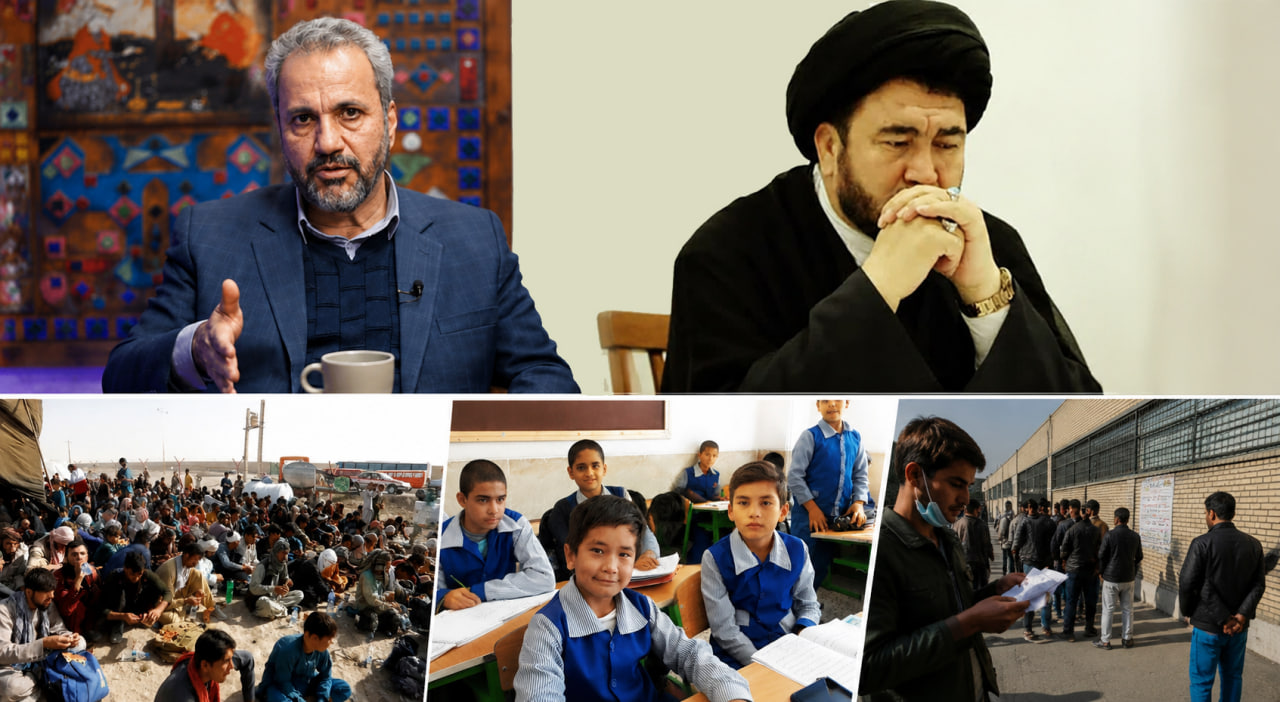
Afghan migrants in the Islamic Republic of Iran, as a neighboring country with deep historical, cultural, and social ties to Afghanistan, have certain demands and expectations that may seem excessive to some. However, these expectations are neither without reason nor without roots. Years of living alongside the people of Iran, shared historical and cultural ties, common hardships, as well as what Afghan migrants describe as decades of defending and supporting the Islamic Republic and the system of Wilayat al-Faqih, have led some migrants to expect that, under the difficult circumstances of today, they will be treated with dignity, respect, and in accordance with humanitarian and Islamic values.
Naturally, migrants must respect the laws of the Islamic Republic of Iran and consider compliance with the law their responsibility. However, the reality is that, over the past decades, the situation of migrants has been managed less through a comprehensive and clearly defined immigration law and more through a collection of circulars, resolutions, and directives. This has created numerous difficulties and ambiguities both for government officials responsible for implementation and for the migrants themselves.
The authorities of the Islamic Republic of Iran are expected to ensure that the human dignity of migrants is preserved throughout the process of regulating their status, and that no migrant is subjected to disrespect or inappropriate treatment under the pretext of enforcing the law. It is appropriate that the officers and officials responsible for migrant affairs also receive the necessary guidance and instructions so that the enforcement of the law is accompanied by respect, Islamic ethics, and regard for the dignity of individuals.
Let Us Not Ignore the Right of Migrant Children to Education
One of the most important concerns of migrant families is the educational future of their children—children who, in many cases, have lived in Iran for years and have spent part of their childhood and developed part of their social identity in the schools of this country.
We ask the authorities to pay special attention to the education and upbringing of migrant children, including both those who previously held the relevant documents and whose validity is now being questioned or has been declared revoked by the government, as well as those who do not possess such documents, and to find a practical, humane, and lawful solution that will allow them to continue their education.
It is possible that previous generations in Afghanistan, at certain points in history, were caught up in war, insecurity, tribalism, regionalism, and religious divisions, and may even have made mistakes in their decisions and actions. However, the children of today bear no responsibility whatsoever for the mistakes or lack of awareness of previous generations.
No child should be deprived of education in order to pay the price for mistakes in which they had no role. These children have the right to study, to grow, and to build a better future for themselves, their families, their communities, and their region.
Today, more than ever, there is a need for a responsible and compassionate approach to the issue of migrants. The regulation of migrants and enforcement of the law can take place while preserving human dignity, respecting children's rights, and providing access to education. These two matters do not necessarily have to be placed in opposition to one another.
It is hoped that the authorities of the Islamic Republic of Iran, with an Islamic, humanitarian, and compassionate approach, will provide clear and practical solutions to the existing problems, so that both the concerns of the government and the host society are reduced and migrant families are freed from uncertainty and anxiety about the future of their children.
May the soul of the Leader of the Ummah, the martyred Leader of the Islamic Revolution, and the other honored martyrs of the Axis of Resistance rest in peace, and may their memory be everlasting.
Author: Sayed Noor Ahmad Mobarez